
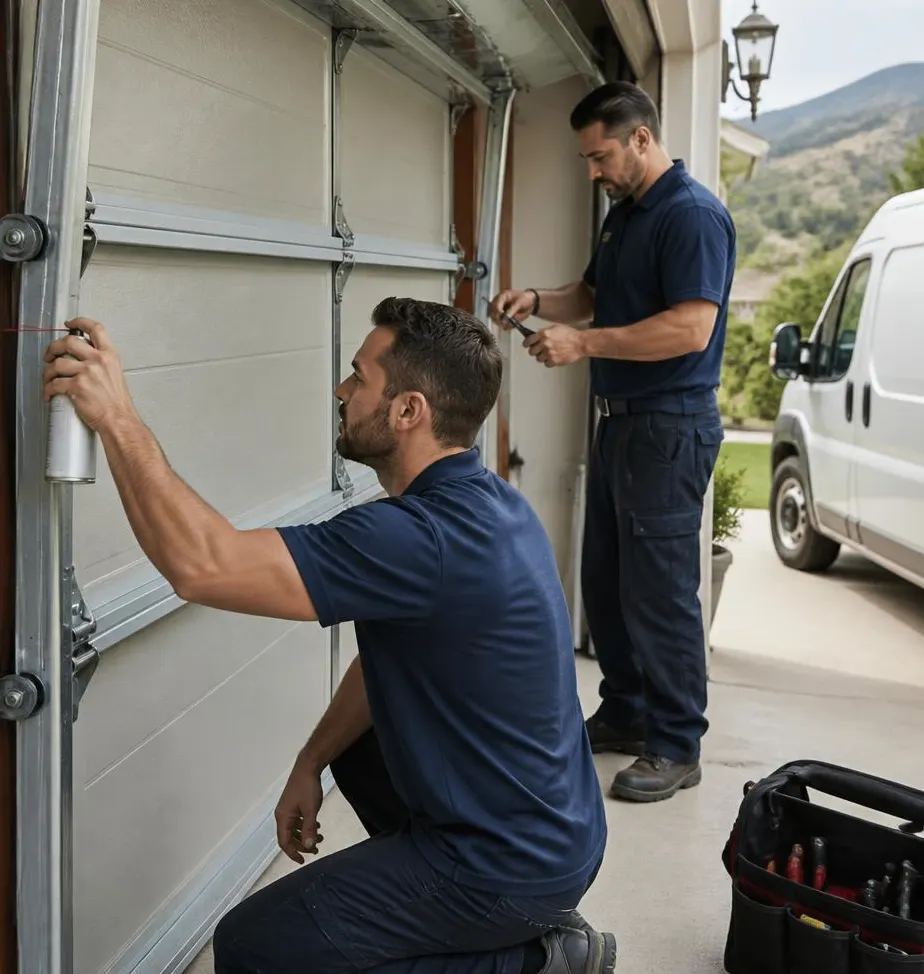
What a Technician Sees Before the Phone Rings
Most spring calls in this area start the same way: a homeowner tries to open the garage door and it feels like lifting a car hood with the hood springs cut. Or the opener strains, grinds, and stalls halfway up. By the time a technician gets there, the spring has usually already given out—a torsion spring split in two on the shaft, or an extension spring stretched into a long, loose coil that no longer has any tension left. In almost every one of these calls, there were signs for weeks beforehand. The homeowner just didn't know what to look for, or assumed the noise and stiffness were normal wear from the heat and humidity.
Springs in this part of Florida take a particular beating. Afternoon downpours and heavy humidity swell wood and metal components, hurricane season adds extra open-close cycles as people check on their homes before and after storms, and moisture in the air speeds up rust on coil surfaces that aren't properly lubricated. A spring rated for a certain number of cycles under normal conditions can wear faster here than it would in a dry climate. That makes a seasonal check worth doing before the next named storm, not after.
The Checklist: What to Look For in Your Own Garage
1. Visual Gaps or Separation in the Coils
Torsion springs sit horizontally above the door, usually on a metal shaft with a stationary cone on one end. Look for any gap in the coil where it looks like the metal has pulled apart or separated slightly, even a small one. This is often the first visible sign of a spring under stress and close to failure. A clean, uniform coil with no daylight showing through unusual gaps is what you want to see.
2. Rust, Pitting, or Flaking on the Coil Surface
Run your eyes (not your hands) along the length of each spring. Surface rust that looks like orange dust or flaking metal weakens the coil from the outside in. In humid conditions, rust can form even on springs that are only a few years old if they weren't lubricated. Pitting—small pockmarks in the metal—means the metal itself is degrading, not just discoloring. That's a structural issue, not a cosmetic one.
3. The Balance Test
Disconnect the opener by pulling the red release cord, then lift the door manually about halfway. A properly balanced door with healthy springs will stay roughly in place on its own. If it drops on its own, or if it feels noticeably heavier than it used to, the springs are losing tension and no longer doing their job of counterbalancing the door's weight.
4. The Door Doesn't Sit Flush or Sits Crooked
Stand back and look at the door when it's fully closed. If one side sits lower than the other, or the door looks slightly twisted in its frame, one spring (on doors with two) may be weaker than the other. Mismatched spring tension puts extra strain on tracks, rollers, and the opener, and it's a common cause of off-track issues down the road.
5. Stretched or Overextended Extension Springs
If your door uses extension springs (the long springs that run along the horizontal tracks rather than above the door), check their resting length against how long they looked when the door was new, if you have a reference. A spring that looks noticeably longer and looser than its neighbor, or that doesn't snap back tightly when the door is closed, has lost elasticity and is on borrowed time.
6. Frayed or Loose Safety Cables
Extension springs should have a safety cable running through the center of the coil. Check that the cable is intact, not frayed, and properly anchored at both ends. This cable is what keeps a failed spring from becoming a projectile, so it matters almost as much as the spring itself.
7. New Noises During Operation
A grinding, popping, or metallic creaking sound that wasn't there before—especially right as the door starts to move—often means a spring is working harder than it should, or coils are rubbing against each other unevenly. A loud bang, even once, almost always means a spring has already partially or fully failed.
8. The Opener Is Working Overtime
If your opener motor runs longer than it used to, clicks before engaging, or seems to strain audibly on the way up, it's compensating for springs that aren't carrying their share of the door's weight. This also shortens the opener's lifespan, so a weak spring can end up costing you twice.
When to Call Precision Garage Door of Mount Dora
If you check off more than one or two items on this list, don't wait for the spring to let go on its own—a full failure can happen without warning and the door can drop hard. Our technicians handle Garage Door Spring Repair for both torsion and extension systems, replacing springs in matched pairs so the tension stays even and the door moves the way it's supposed to. If you're not sure whether what you're seeing is a spring issue or something else, our Garage Door Maintenance & Tune-Up service covers a full inspection of springs, cables, rollers, and balance, so small problems get caught before they turn into a Saturday morning emergency.
If your garage door in Mount Dora, FL feels heavier than it used to, sounds different, or just doesn't look right, give Precision Garage Door of Mount Dora a call. We'll take a look, tell you honestly what's going on, and get it fixed before it becomes a bigger problem.